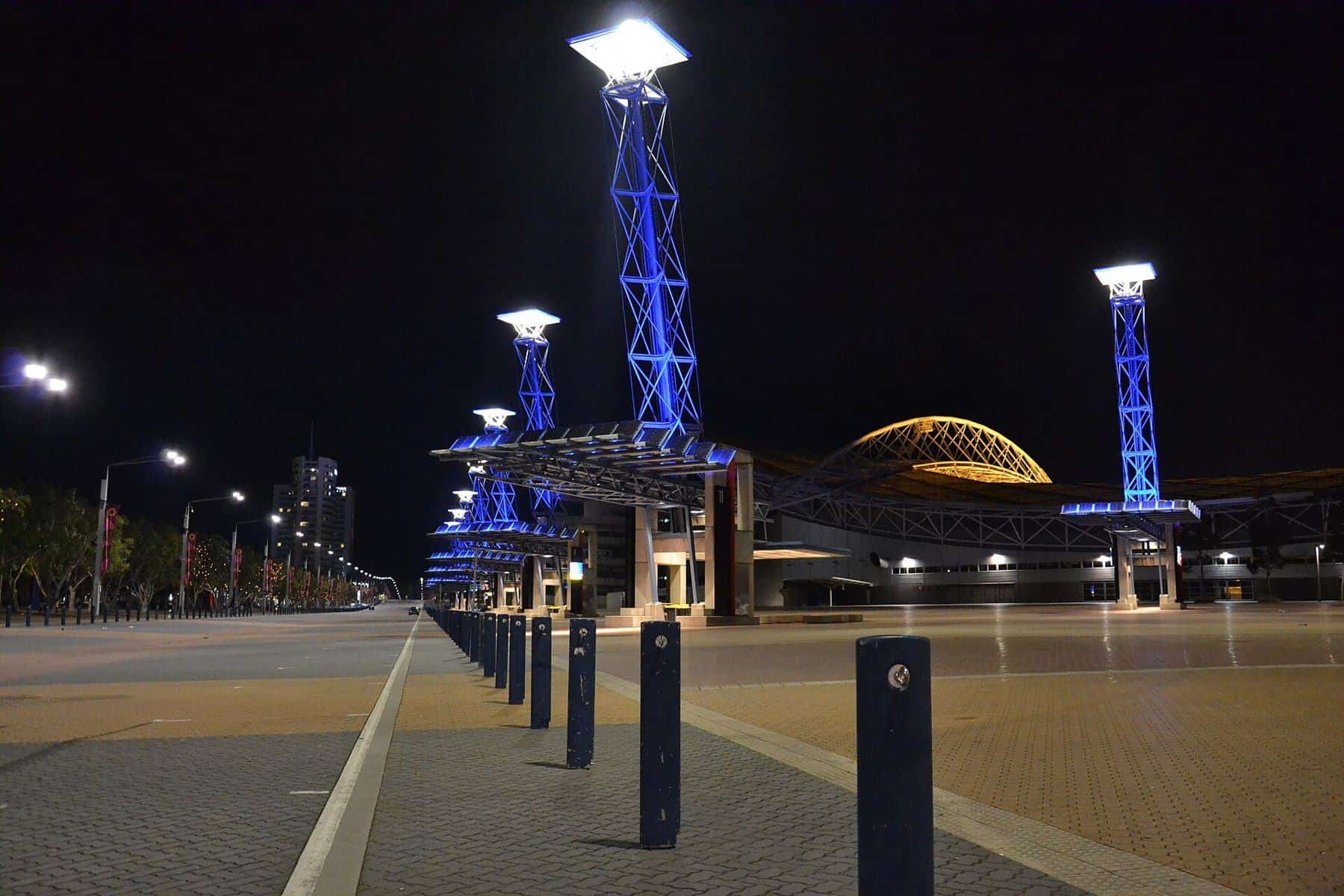
Public transport was a cornerstone of the Sydney 2000 plan, and the park still has some of Sydney's best event transport. Whether you are going to a match, a concert, the Easter Show or a walk in the parklands, here is how to get there.
By train
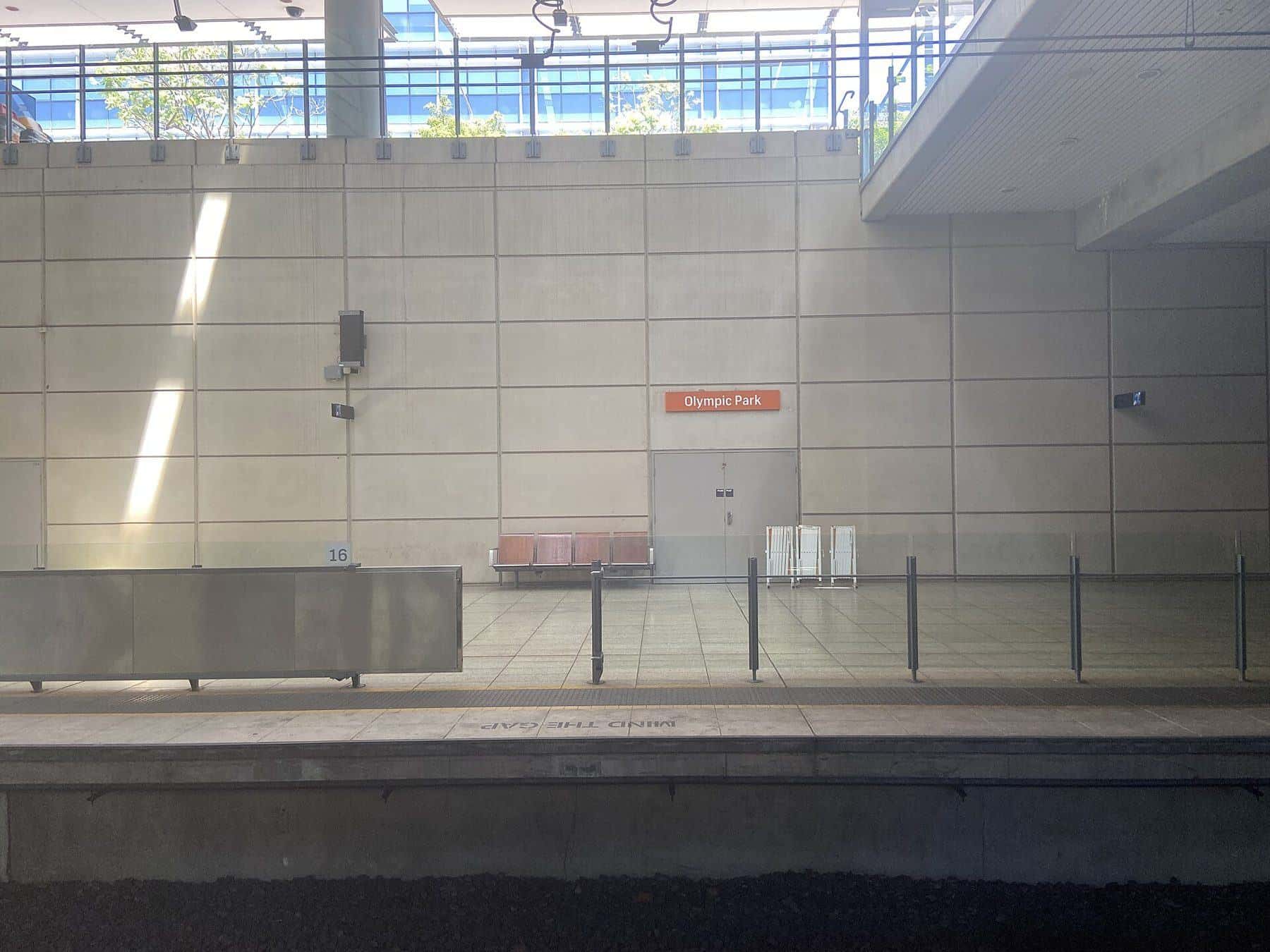
Olympic Park station is in the heart of the park, a short walk from the stadium, arena, Showground and Aquatic Centre.
- On normal days, the T7 Olympic Park Line shuttles between Lidcombe and Olympic Park. Change at Lidcombe from T1 Western and T2 Inner West lines.
- On major event days, extra trains often run direct from Central and other parts of the network.
A station built for crowds
The station opened in March 1998, along with the new Sydney Showground. It sits on a loop line rebuilt from the old line that once served the state abattoirs. It has four platform faces: on big event days, arriving passengers use the central platform and departing passengers use the side platforms, keeping crowds moving. The station's design won architecture awards, including the Sir John Sulman Medal.
By ferry
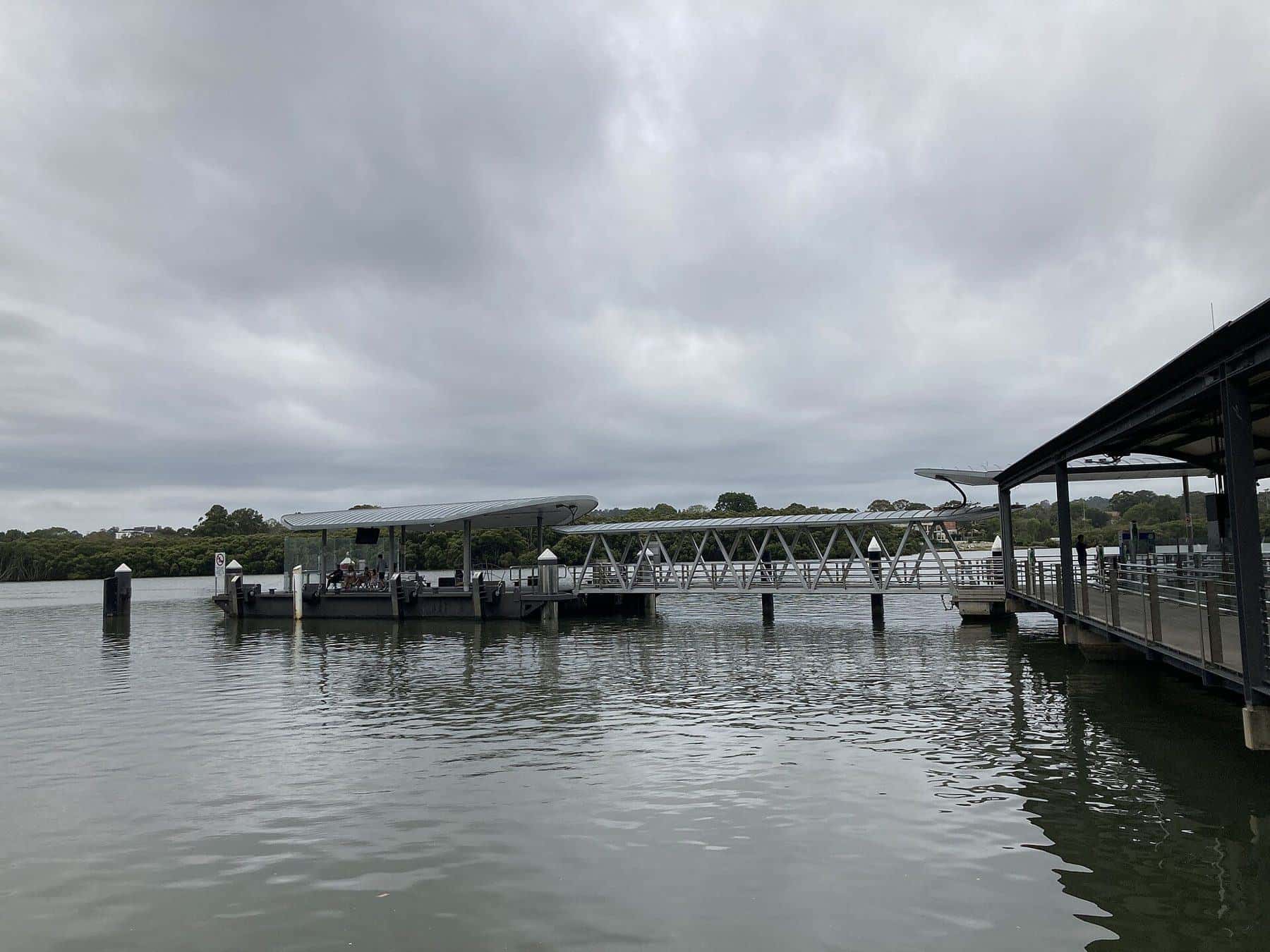
The Parramatta River ferry stops at Sydney Olympic Park wharf, between Circular Quay and Parramatta. The ride along the river is a scenic way to arrive. A bus links the wharf with the park, as the wharf is a short distance from the venues.
By bus
Regular bus routes connect Olympic Park station with Parramatta, Strathfield, Rhodes, Chatswood and other areas. On event days, special event buses may run from several parts of Sydney. Check the trip planner for current routes.
By car
The park is close to the M4 Motorway and Homebush Bay Drive. There are several multi-storey and open car parks, with fees. On major event days:
- Car parks fill quickly, and pre-booking may be required.
- Roads around the park can be congested before and after events.
- Some roads close for events.
Consider using public transport on event days.
By bike or on foot
The park has an extensive network of shared paths linking to the Parramatta River foreshore, Bicentennial Park and surrounding suburbs. Bike racks are available near venues. Walking from Rhodes, Wentworth Point or Homebush is possible for those nearby.
From the airport
From Sydney Airport, take the train to Central or another interchange, then travel west to Lidcombe and change for Olympic Park. Allow plenty of time. A taxi or rideshare is faster but more expensive, especially in peak hour.
Event day tips
- Check your ticket: many major event tickets include public transport.
- Use Opal or contactless: tap on and off with an Opal card, contactless card or device.
- Travel early: the busiest time is the hour before the event starts.
- Know your way home: after big events, queues form at the station. Staff manage the flow.
- Consider the ferry or walking to nearby suburbs to avoid peak queues.
Sydney Metro West
Sydney Metro West is planned to link Parramatta and the Sydney CBD, with a station at Sydney Olympic Park. When it opens, it will make the park much faster to reach from both directions. Check Sydney Metro for current timelines.
Accessibility
Olympic Park station and the main walking routes are step-free. Accessible parking is available. Read our accessibility guide.
Getting there checklist
0 of 5 done
Ticks are saved in this browser only.
How the Games moved the crowds
During the 2000 Games, the rail line carried enormous numbers of spectators each day, supported by buses on dedicated routes and park-and-ride sites. Event tickets included public transport, a model since used for many Sydney events. The old Gamesinfo site's "Getting Around" section guided visitors through the system, and the same principles still apply: use public transport, travel early and follow staff directions.
Bike and scooter rules
Shared paths are used by walkers, runners, cyclists and families, so ride at a safe speed and give way to pedestrians. On major event days, some paths may be closed or busy with crowds. Check local signs for any restrictions on e-scooters and e-bikes, as NSW rules have changed in recent years.
Before you travel
Trackwork, special event timetables and road closures are common around Sydney Olympic Park. Check the Transport for NSW trip planner and the park's event information on the day.
Frequently asked questions
How long does it take to get from the city to Sydney Olympic Park?
Travel time depends on your route and connections. Direct event trains from Central are fastest; on normal days allow extra time for the change at Lidcombe. Use the trip planner for current times.
Can I use contactless payment on trains and ferries?
Yes. You can tap on and off with an Opal card or a contactless credit or debit card or device on Sydney trains, ferries and buses.
Which train goes to Sydney Olympic Park?
The T7 Olympic Park Line runs between Lidcombe and Olympic Park station. On major event days, extra direct services may run from the city and other lines.
How do I get to Sydney Olympic Park by ferry?
Parramatta River ferries stop at Sydney Olympic Park wharf. A bus connects the wharf with the park.
Is there parking at Sydney Olympic Park?
Yes, there are several car parks with fees. On event days parking fills up and may need to be booked.
Is public transport included in event tickets?
For many major events, tickets include free public transport to and from the event. Check your ticket conditions.
Will there be a metro to Sydney Olympic Park?
Sydney Metro West is planned to include a Sydney Olympic Park station. Check Sydney Metro for the latest timeline.
Sources and further reading
Facts on this page were checked against these primary and official sources. Conditions change — confirm before you travel or buy.
- Trip planner — Transport for NSW
- Getting here — Sydney Olympic Park Authority
- Olympic Park railway station — Wikipedia
- Sydney Metro West — Sydney Metro
- Opal fares — Transport for NSW